
Mar 17, 2026
Women Leading Water Spotlight Series
The water industry is driven by individuals who care deeply about the work they do.
Our Women Leading Water Spotlight Series features women from the organizations supporting this initiative by sharing their journeys, reflections on leadership, and what being a woman in water means to them today.
We’re grateful to spotlight the voices and perspectives that help strengthen and support the water community. Join us to celebrate Women Leading Water this March at The Water Tower.
Meet Hattie Walrod
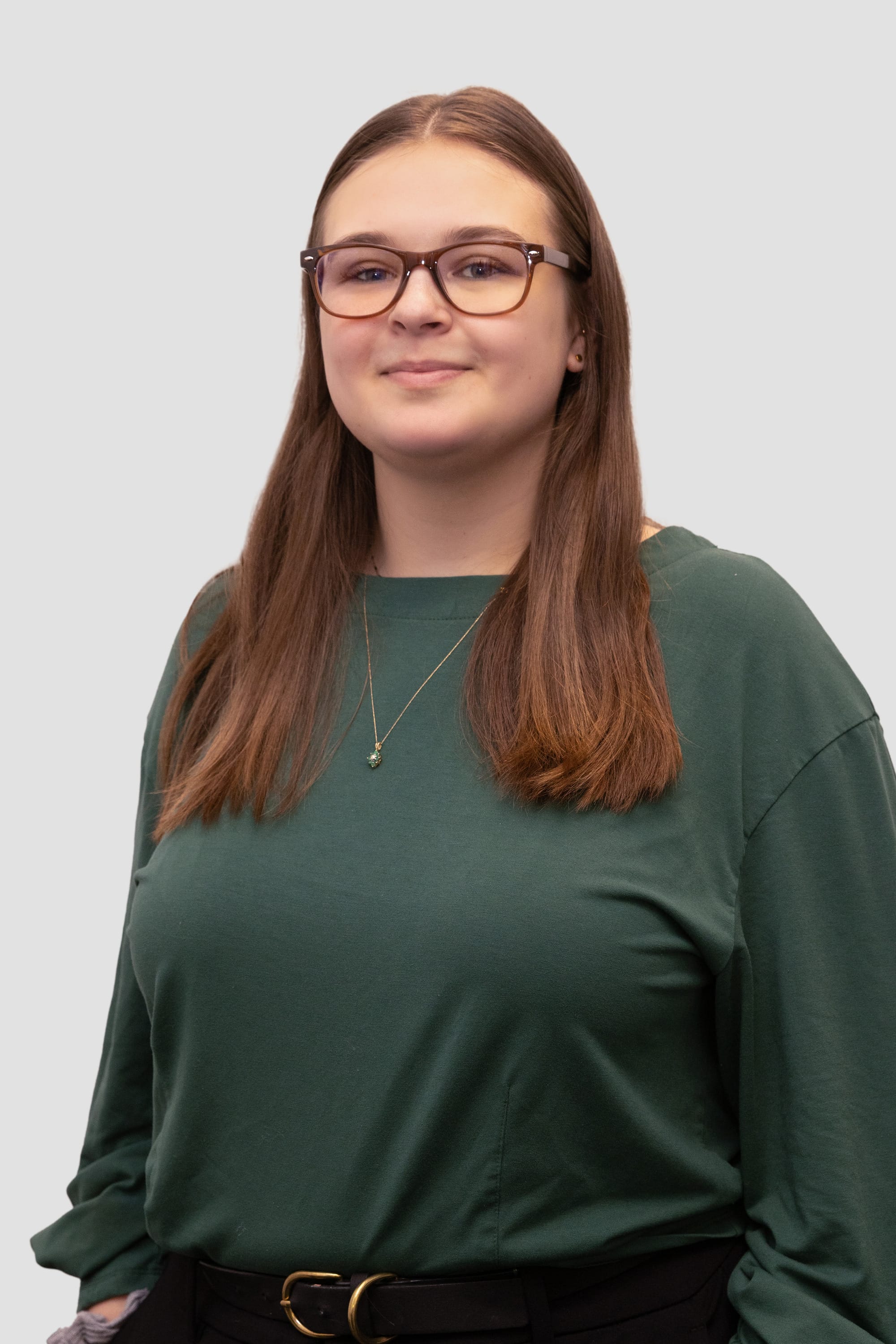
Engineer in Training
Gresham Smith
Can you share a bit about your journey and what led you to work in water?
My name is Hattie Walrod and I'm currently an EIT in the Water and Environment team at Gresham Smith.
I looked up to my grandfather who spent his career as an engineer for the Arkansas Hwy Department. Since high school, I knew that I wanted to pursue an environmental science or engineering degree.
I started attending KSU (SPSU) in 2018 as an environmental engineering major. During the first two years of college, I was still exploring and searching for a disciple of engineering that I was excited about. I took my first fluid mechanics class as sophomore with a professor that I liked and I felt like the material clicked with me. That class, as well as my water and wastewater treatment classes, gave me a direction to follow.
I had an internship working with subsurface utility surveys and was exposed to the complex and massive task of locating and coordinating underground utilities. I’m very fun to go on walks with because I still keep and eye out for the flags and spray paint on the ground!
I graduated with my bachelor's degree in environmental engineering in 2021 and started working at an engineering firm as an EIT in their public utilities market. It was small firm where I was able to experience a range of projects, including a water treatment plant expansion in Louisiana, AMI projects, municipal utility relocations, construction administration, and water loss auditing.
After 3 years as that firm, I had a clearer idea about the types of projects I was interested in, the day to day processes I enjoyed, and the kind of company culture I wanted. Thanks to a former coworker from my internship who recommended me, I joined Gresham Smith. Since then, I have been able to focus more deeply on my interests within water and environmental engineering and continue to grow professionally.
What is the most rewarding part of your job?
For me, one of the most fulfilling parts of my job is knowing that a project I worked on exists in the physical world and helps provide an important service to. I also, a bit more selfishly, enjoy the puzzling and problem-solving that comes with subsurface utilities. It is so satisfying to able to navigate the web of existing utilities and figure out how to make a design work.
Why is celebrating women in water so important?
The water and environmental engineering disciplines have among the highest rates of women employed in engineering. I think that makes us, women in water, leaders in advocating for all women in STEM fields. This visibility means that we are an example for other STEM disciplines. As more women pursue degrees and jobs in STEM, we are able to demonstrate the positive impacts of including, accepting, and encouraging women and support diversity and inclusion in the workforce.
We thank Hattie and Gresham Smith for supporting Women Leading Water and sharing their perspective with our community!
The Water Tower consists of two nonprofit organizations: The Water Tower at Gwinnett, a 501(c)4 – responsible for the development and operations of the campus, and The Water Tower Institute, a 501c3 – responsible for solutions, instruction, and engagement programming. Together, these entities are cultivating an ecosystem of water innovation fueled by imagination, informed by research, and powered by pioneers. The Water Tower brings together public and private sectors of the water industry, side by side with academia and nonprofits, to tackle the industry’s greatest challenges.