
May 14, 2026
Dr. Glen T. Daigger brings decades of global water industry leadership and innovation expertise to The Water Tower at Gwinnett. As a member of TWTI’s Board, he helps support our mission of advancing collaboration, research, and workforce development across the water sector. Glen shared more about his background, what inspires his work, and the perspective he brings to the future of water.
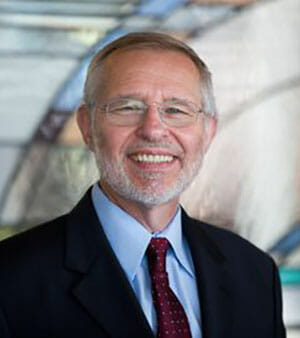
Please tell us a little bit about yourself and your background.
I am a water person. Currently a Professor of Engineering Practice in Civil and Environmental Engineering at the University of Michigan, I previously spent 35 years as the Chief Wastewater Process Engineer and Chief Technology Officer for Water at the global engineering firm CH2M HILL (now part of Jacobs). Thus, I “blend” theory and practice in my background, and do so today as I continue to practice through the little LLC I formed called One Water Solutions (catchy name – right!).
What inspired you to join The Water Tower’s board, and what keeps you engaged in our mission today?
I was drawn to The Water Tower Institute (TWTI) because of its unique nature, which creates interesting new possibilities, and the commitment and enthusiasm of its people. It couples a strong technical base (research, technology) with the critical issue of workforce development, and, on top of that, outreach and service to utilities. What a diverse but logical combination! The good news is that the water profession is progressively addressing and solving the issues before us, but there is no single solution. Water is a complex system, and achieving success requires effectively addressing a diverse range of topics. TWTI “gets” this. It’s like a successful sports team. Championship teams are not built on a single superstar but rather by having excellent players at all positions – no weaknesses. This is also true in water, and TWTI exemplifies this phenomenon.
What excites you most about the future of The Water Tower over the next few years?
With nearly five decades of experience as a water professional, I am more enthusiastic about the future of water than ever before. We certainly face challenges, so why do I say this? First, there is a rapidly growing set of tools (technologies, practices) that provide so many new ways to address these challenges. Founded on exponentially growing fundamental scientific and engineering knowledge, new solutions are being rapidly developed and implemented. But, more importantly, we have direction. The concepts of One Water and Resource Recovery are now becoming embedded as the adopted paradigm, and we are learning how to use the tools we have as we experiment and learn. This is a time when credibility, born of demonstrated competence, sets the stage for leadership, a role that TWTI is ideally positioned to play. We also need to grow the next generation of water professionals with the skills, knowledge, and understanding necessary for this direction. This is quite a unique role that TWTI is playing.
What is one piece of advice you would give to those aspiring to enter the water industry?
What a great time to be a water professional! Those entering the profession are fortunate to have such wonderfully interesting and impactful careers ahead of them. If I could offer some advice, it would be to keep learning and moving forward. The future is so bright!
The Water Tower consists of two nonprofit organizations: The Water Tower at Gwinnett, a 501(c)4 – responsible for the development and operations of the campus, and The Water Tower Institute, a 501c3 – responsible for solutions, instruction, and engagement programming. Together, these entities are cultivating an ecosystem of water innovation fueled by imagination, informed by research, and powered by pioneers. The Water Tower brings together public and private sectors of the water industry, side by side with academia and nonprofits, to tackle the industry’s greatest challenges.